
Introduction
As decentralized finance (DeFi) and multichain ecosystems evolve, mobile-first self-custody wallets serve as primary operational gateways for interacting with decentralized exchanges (DEXs) and blockchain networks. Among these tools, Phantom is a widely utilized application across mobile operating systems [2]. However, the convenience of managing digital assets and executing token swaps from a smartphone introduces distinct operational responsibilities and risk boundaries that every participant must understand.
This educational guide examines the technical architecture of the Phantom mobile wallet, the mechanics of mobile DEX token swaps, and structured workflows designed to mitigate operational errors, security threats, and self-custody vulnerabilities.
Educational and Non-Advisory Disclaimer
Disclaimer: This article is published for general educational and informational purposes only and does not constitute financial, investment, legal, or trading advice. Bitcoin Lifestyles Club does not endorse, promote, or recommend any specific cryptocurrency, token, wallet provider, or trading platform. Cryptocurrency markets involve substantial risk of loss, and decentralized finance protocols are subject to smart-contract vulnerabilities, severe price volatility, and liquidity constraints. Readers are solely responsible for conducting independent research and exercising personal judgment before engaging with any blockchain protocol or self-custody tool.
Key Takeaways
- Strict Self-Custody Model: Phantom is a non-custodial wallet application; users retain exclusive control over private keys and recovery seed phrases, meaning the provider cannot recover lost credentials [1].
- Mobile Platform Support: Phantom provides dedicated application support for both iOS and Android mobile operating systems [2].
- Integrated DEX Swaps: The built-in swap functionality permits same-network token exchanges directly within the mobile interface, requiring careful review of routing and market quotes [3].
- Persistent Transaction Risks: Executing swaps via a mobile wallet interface does not eliminate fundamental blockchain risks, including slippage, low liquidity, and malicious smart contracts [3].

Official app icon from the Phantom Google Play listing. View listing →
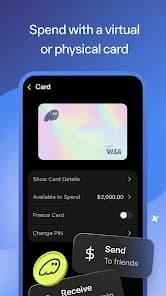
Official Phantom mobile wallet app preview, shown for product recognition and educational review. Source: Google Play listing. © Phantom Technologies, Inc. View source →
Table of Contents
- Introduction
- Educational and Non-Advisory Disclaimer
- Key Takeaways
- Understanding Self-Custody and Mobile Wallet Architecture
- Platform Availability and Multi-Chain Scope
- Mechanics of Mobile DEX Swaps in Phantom
- Practical Workflow: Safe Setup and Execution Checklist
- Risk Analysis: Navigating Slippage, Liquidity, and Security Threats
- Frequently Asked Questions (FAQ)
- Conclusion
- References
Understanding Self-Custody and Mobile Wallet Architecture
To interact safely with decentralized applications, participants must understand the structural differences between custodial exchange accounts and non-custodial wallets. In a custodial model—such as a centralized exchange—a third-party organization holds private keys on behalf of the user, managing account access and password recovery.
Conversely, a self-custodial wallet like Phantom places absolute control and responsibility directly in the hands of the user [1]. When initialized, the application generates a cryptographic private key pair and a recovery seed phrase. According to Phantom’s documentation, the application architecture does not store, access, or maintain copies of user credentials, private keys, or recovery phrases on external servers [1].
| Feature Category | Centralized Custodial Account | Phantom Self-Custodial Mobile Wallet |
|---|---|---|
| Credential Control | Managed by third-party platform operators | Retained exclusively by the user via seed phrase [1] |
| Password Recovery | Supported via email, KYC, and support desks | Impossible for platform operators if seed phrase is lost [1] |
| Network Interaction | Indirectly routed through institutional intermediaries | Direct cryptographic signing of on-chain transactions |
| Account Autonomy | Subject to platform freezes and withdrawal limits | User maintains absolute authority and operational risk |
This autonomy eliminates third-party counterparty risk, but it also means that any security compromise or loss of backup material results in permanent loss of funds.
Platform Availability and Multi-Chain Scope
Modern cryptocurrency users require cross-platform continuity, allowing them to monitor portfolios and execute transactions across desktop browser extensions and mobile devices. Phantom addresses this requirement by supporting multiple operating environments while maintaining cryptographic synchronization through imported seed phrases.
According to official documentation, Phantom supports dedicated application versions for iOS and Android mobile operating systems [2]. This multi-platform support enables seamless asset management when official software distributions are downloaded exclusively from recognized app marketplaces [2].
However, users must be cognizant of device-level threats, including compromised operating systems, unauthorized physical access, and fraudulent lookalike apps distributed through unofficial repositories.
Mechanics of Mobile DEX Swaps in Phantom
Decentralized exchange (DEX) swap mechanisms integrated into mobile wallets permit users to trade tokens directly within the mobile interface without navigating separate web browsers or complex smart-contract routers.
Within Phantom, token exchanges are accessed through the Trade tab [3]. The swap mechanism queries decentralized liquidity pools and market makers to route trades between supported digital assets on the same network [3].
| Operational Parameter | Description and User Consideration |
|---|---|
| Native Gas Requirement | Executing any token swap requires sufficient native network currency (such as SOL) to pay for underlying validator fees [3]. |
| Slippage Tolerance | The allowable percentage variance between estimated execution price and final settlement price during volatility. |
| Price Impact | The degree to which a specific trade size alters the exchange rate within low-liquidity pools [3]. |
| Quote Review | The mandatory verification window where users inspect exchange rates and routing before confirming [3]. |
Users must evaluate these parameters carefully, as blockchain transactions are immutable once confirmed by validators.
Practical Workflow: Safe Setup and Execution Checklist
Establishing a disciplined workflow minimizes operational errors and security vulnerabilities. Below is a structured checklist for setting up and operating the Phantom mobile wallet.
Phase 1: Secure Installation and Initialization
- Verify Official Sources: Navigate exclusively to official application distribution channels (Apple App Store or Google Play Store) corresponding to official links provided by Phantom [2].
- Generate New Wallet or Import: Select the appropriate initialization path. If generating a new wallet, transcribe the recovery seed phrase manually onto physical paper. Never take digital screenshots or transmit seed phrases electronically.
- Establish Biometric Protection: Enable device-level biometric authentication (Face ID or fingerprint recognition) to secure local application access.
Phase 2: Executing a Mobile DEX Swap
- Navigate to Trade Tab: Open the application and select the swap interface [3].
- Select Token Pairs: Choose the input and output tokens. Verify official token contract identifiers rather than relying solely on token names.
- Analyze Execution Quotes: Review exchange rates, network fees, slippage settings, and price impact indicators [3]. Ensure sufficient native token balance remains for gas fees [3].
- Confirm Transaction: Authorize cryptographic signatures only after verifying all trade parameters.
Risk Analysis: Navigating Slippage, Liquidity, and Security Threats
Operating a self-custodial mobile wallet exposes participants to distinct categories of risk that software interfaces cannot eliminate.
Smart-Contract and Token Risks
Decentralized exchange swaps rely on automated smart contracts. Unsolicited tokens or low-liquidity assets often incorporate transfer restrictions or malicious functions that prevent holders from selling after purchase [3].
Market and Liquidity Mechanics
Low-liquidity trading pairs exhibit high price impact, meaning moderate transaction sizes can drastically alter execution prices [3]. Rapid market volatility can also cause slippage exceeding configured limits.
Social Engineering and Spoofing
Phishing attacks, fraudulent support accounts, and malicious links represent persistent threats. Official support channels will never request a user's recovery seed phrase. Users must reject unsolicited communications.
Frequently Asked Questions (FAQ)
1. Can Phantom recover my wallet if I lose my mobile phone and seed phrase?
No. Phantom is a non-custodial wallet and does not store user credentials or seed phrases [1]. If backup material is lost, access cannot be recovered [1].
2. Why is a native token required when executing a DEX swap?
Executing blockchain transactions requires paying network fees in the network's native currency (such as SOL) [3]. A baseline native balance must remain in the wallet to process trades [3].
3. What causes a high price impact warning during a DEX swap?
A high price impact warning indicates that the requested trade size is large relative to available pool liquidity, which can result in unfavorable execution rates [3].
4. How can I protect my mobile wallet against unauthorized access?
Protection relies on securing physical backup phrases offline, enabling device biometrics, avoiding public Wi-Fi networks when signing transactions, and never connecting to unverified applications.
Conclusion
Mobile self-custodial wallets like Phantom offer accessibility and control over digital asset management and DEX participation [1, 2, 3]. However, autonomy places security responsibility entirely on the user. By understanding software architectures, adhering to backup protocols, and respecting market liquidity boundaries, participants can engage with blockchain ecosystems safely.
To deepen your understanding of market mechanics and professional trading workflows, Explore the Full Crypto Market Education Library through the Bitcoin Trading Mastery Course.
For advanced analytical tools and dedicated resources, explore See Premium Access.
References
- Phantom. "Get started with Phantom." Phantom Help Center. Available at: https://help.phantom.com/hc/en-us/articles/36482144712083-Get-started-with-Phantom.
- Phantom. "Supported platforms and browsers." Phantom Help Center. Available at: https://help.phantom.com/hc/en-us/articles/48456789393811-Supported-platforms-and-browsers.
- Phantom. "Swap crypto in Phantom." Phantom Help Center. Available at: https://help.phantom.com/hc/en-us/articles/5985106844435-Swap-crypto-in-Phantom.